
The Short Answer
In Bartow, a garage door that feels "frozen" to the ground is almost never actual ice — it's usually moisture, rust, or thickened grease reacting to a sudden temperature drop. Central Florida winters bring occasional cold fronts, but they rarely dip low enough or stay cold long enough to freeze condensation solid against a concrete slab.
The exceptions matter, though. During a hard freeze warning — which does happen a few nights a season in Polk County — overnight dew or a wet driveway can form a thin layer of ice right where the bottom seal meets the slab. Doors near shaded carports or north-facing bays, where the sun never hits the threshold, are the most likely to actually ice over. For everyone else, "stuck" usually has a different cause, and it pays to check things in the right order instead of forcing the door and bending a track.
Symptoms Worth Paying Attention To
- The door won't budge when you press the opener button, and the motor just hums or strains.
- It opens or closes noticeably slower than usual, especially in the first few feet of travel.
- You hear a grinding or scraping sound right at the bottom before it breaks free.
- The opener reverses on its own, acting like it hit resistance.
- The bottom weatherstrip looks glued to the garage floor, or you can see a faint water line where it was sitting.
None of these symptoms alone tell you the cause — that's why a technician works through a checklist rather than guessing.
What a Technician Checks First
1. The Bottom Seal and Threshold
This is the first and most common culprit in our climate. Humid nights followed by a cool morning can leave condensation under the rubber seal, and if the seal has flattened or cracked with age, it sits flatter against the slab and bonds more easily. The fix is simple: gently break the seal free by hand (never force the opener), then inspect the weatherstrip. If it's brittle, cracked, or no longer flexes back into shape, it gets replaced — a cheap fix that also helps keep wind-driven rain out during storm season.
2. Track Alignment and Lubrication
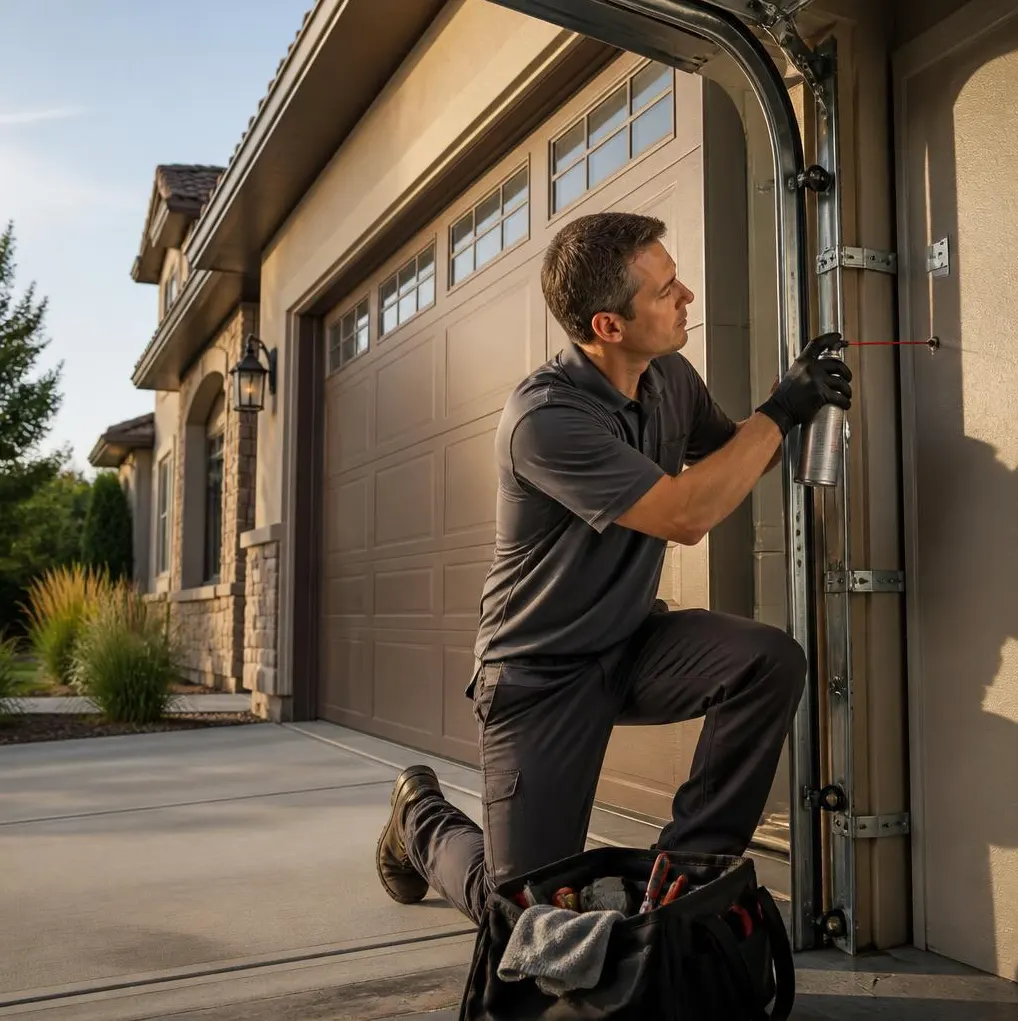
Cold mornings thicken old grease and make tracks less forgiving of small misalignments that the door normally powers through without issue. A technician checks the tracks for dirt buildup, pollen film, or rust specks, cleans them, and applies a silicone-based lubricant rated for garage door use — never WD-40, which attracts dust and breaks down fast in humid air. If a track has shifted even slightly out of plumb, that gets corrected before it turns into an off-track door.
3. Spring Tension
Metal contracts slightly in cold weather, which can make a spring that was already near the end of its life feel noticeably weaker overnight. If the door is heavy to lift by hand, moves in jerky stages, or the opener strains more than usual, tension is checked next. A spring that's genuinely failing won't fix itself once the weather warms back up — it needs adjustment or replacement, and this is not a DIY repair given how much force is stored in a wound spring.
4. Rollers and Hinges
Afternoon downpours followed by humid, cool nights are rough on hardware. Rollers and hinges that sat through a wet summer often develop surface rust by the time the first cool snap hits, and rusted rollers bind in the track instead of rolling smoothly. The fix is cleaning, lubricating, or replacing worn rollers — nylon rollers tend to hold up better than steel in Polk County's moisture swings.
5. Opener Force and Limit Settings
If everything mechanical checks out but the door still reverses or struggles, the opener's force and travel-limit settings are checked next. These can drift over time, and a door that was fine all summer may suddenly seem to "fight" the opener once added resistance from any of the issues above is introduced. Adjusting these settings is quick, but it should happen after mechanical problems are ruled out — otherwise you're just masking a bigger issue.
6. Panel Swelling (Wood Doors)
If the door is wood or wood-composite, humidity swings can cause panels to swell slightly, tightening the fit inside the tracks. This shows up as a door that drags or binds at the same spot every time. A technician checks for this last because it's less common than the mechanical issues above, but it's worth ruling out if the door is older and has seen a few wet seasons without resealing.
When to Call Bartow Garage Door Repair
If your door is sticking at the bottom seal more than once or twice a season, it's usually fine to handle with a seal replacement and some lubricant. But if the door feels heavy, the opener strains, or you hear grinding from the tracks, it's time to call us. Our Garage Door Maintenance & Tune-Up service covers exactly this kind of seasonal check — we inspect the springs, rollers, tracks, and opener settings together, rather than guessing at one part in isolation. If the inspection turns up a weak or damaged spring, our Garage Door Spring Repair team handles that safely on-site, since re-tensioning or replacing a spring under load isn't something to attempt yourself.
If your garage door in Bartow, Lakeland, Winter Haven, or anywhere else in Polk County is sluggish, sticking, or straining this season, give Bartow Garage Door Repair a call. We'll figure out exactly what's going on and get it moving the way it should.