
Rule of thumb: once hurricane season winds down, give your garage door a once-over before the dry, cooler months set in. The exceptions are houses that took on water or wind stress during storm season, doors that already stick or groan, and anyone whose opener battery backup hasn't been tested since spring — those need attention now, not whenever it's convenient.
Why Winter in Polk County Still Means Something for Your Door
Winter here doesn't bring snow or ice, but it does bring a real shift: the air dries out, nights get cooler, and the daily afternoon downpours that pound garage doors all summer finally taper off. That shift matters because a garage door that's been swelling and sticking from humidity all year will suddenly start moving differently as the wood, weatherstripping, and even steel panels contract slightly in the drier, cooler air. If you ignore that change, small issues from storm season — a slightly bent track, a hairline rust spot, a cable that's been fraying quietly — tend to get worse instead of better.
Check for Storm Season Damage First
Before you do anything else, walk around the door and look for damage that's been hiding in plain sight since the last big blow:
- Track alignment: look down the length of each track from the bottom. Gaps, bends, or a track that's pulled away from the wall bracket are signs of wind load or impact stress.
- Panel dents or bowing: even small dents can throw off how panels seat against each other, letting wind-driven rain in during the next storm.
- Rust at the hinges and bottom panel: salt-tinged humid air accelerates corrosion, especially where water has pooled against the bottom seal.
- Weatherstripping gaps: press along the bottom seal and side seals with your hand. Any spot where daylight or a breeze gets through is a spot where cold snaps and wind-blown debris will get through too.
If you spot bent tracks or hardware pulling away from the frame, don't try to force the door back into alignment yourself — that's a job for a technician, since a door forced back into a bad track can jump off entirely.
Lubrication and Weatherstripping for Drier Air
As humidity drops, moving parts that have been swollen and sluggish all year often loosen up — which sounds good, but it also means old grease and lubricant that was doing an adequate job in sticky summer air can dry out and stop protecting metal-on-metal contact points.
- Apply a silicone-based lubricant (not household oil, which attracts grit) to hinges, rollers, and the track where rollers ride.
- Check the bottom weatherstripping for cracking or brittleness. Vinyl seals that spent months expanding and contracting in heat and rain can crack once temperatures start swinging between warm afternoons and cooler nights.
- Wipe down tracks to remove the gritty residue that builds up from months of humid, dusty air sticking to lubricant.
Springs, Cables, and the Temperature Swing Problem
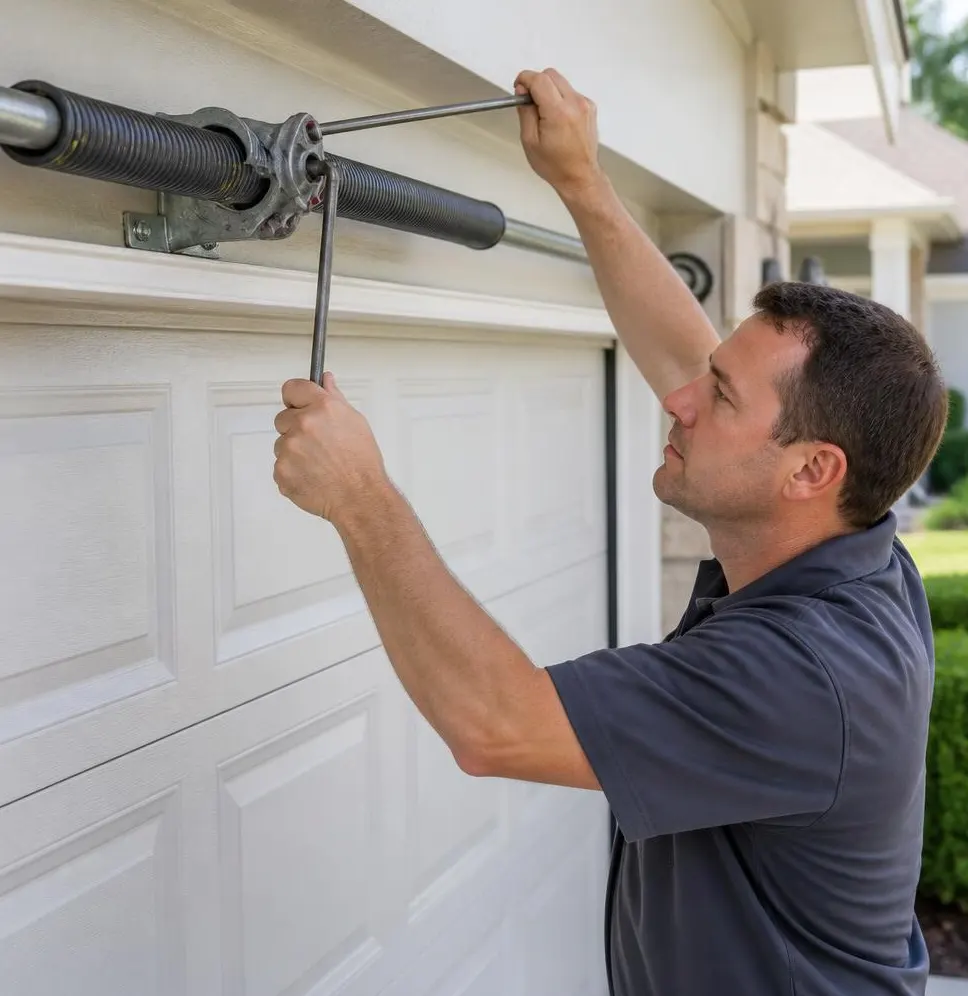
Torsion and extension springs work under constant tension, and metal fatigue doesn't pause for the seasons — but temperature swings between warm days and cool nights can make a spring that was already near the end of its life snap sooner rather than later. Watch for:
- A door that feels noticeably heavier when lifted manually (with the opener disconnected).
- A visible gap in a torsion spring, or a spring that looks stretched compared to its resting coils.
- Cables that look frayed, kinked, or are sitting loosely off their drum.
These are not DIY repairs. Springs under tension can cause serious injury if they let go while you're working near them, and cable repair carries similar risk. If you notice any of these signs, that's the point to call in a professional rather than keep testing the door's luck.
Opener and Safety Sensor Check
Shorter days mean the opener gets used more often in low light, so it's worth confirming the safety sensors near the bottom of the tracks are aligned and the indicator lights are solid, not blinking. Test the auto-reverse function by placing a block of wood in the door's path and making sure it reverses instead of continuing to close. If you have a battery backup, test it now — storm season is when you need it most, but it's easy to forget it's been quietly drawing down since the last outage.
A Quick Tune-Up Beats a Mid-Season Breakdown
Garage doors that go into the cooler months with stiff springs, dry cables, and misaligned sensors tend to be the ones that fail on the first genuinely cold, busy morning — usually when you're already running late. A short list to run through once a year, ideally right after storm season wraps up:
- Visual inspection of tracks, panels, and hardware for storm-related wear.
- Lubrication of rollers, hinges, and springs.
- Balance test with the opener disconnected.
- Sensor alignment and auto-reverse test.
- Battery backup test, if applicable.
When to Call Bartow Garage Door Repair
If your inspection turns up a stretched or gapped spring, a cable that's fraying, or a track that's bent out of shape from the season's storms, that's our cue to step in. Our Garage Door Spring Repair and Off Track Door Repair services handle exactly these problems — we'll assess the tension, hardware, and alignment safely and get the door back to moving the way it should, without you having to work anywhere near a loaded spring. We also offer full Garage Door Maintenance & Tune-Up visits if you'd rather have a technician run the whole checklist for you.
If you're searching for a garage door company in Polk County FL or need a garage door technician near N Broadway Ave Bartow before the season turns, give Bartow Garage Door Repair a call — we serve Bartow, Lakeland, Winter Haven, Mulberry, Fort Meade, Eagle Lake, Lake Wales, and Auburndale, and we're ready to help your door handle whatever this winter brings.